
Quality & standards
How we assess cocoa quality
Every lot is checked openly, with the seller present. Here is what we look at, and how good preparation earns a better grade.
Our checks
What happens to your sample
Sampling
A representative sample is taken from across your bags, not just the top.
Cut test
Beans are cut lengthwise to check fermentation and count defects: mouldy, slaty, insect-damaged, germinated and flat beans.
Moisture
Moisture is checked, because beans that are too wet go mouldy in storage.
Grade & weight
The lot is graded, weighed on a verified scale, and both are written on your receipt.
Grading
Commercial grades
Under Decree No. 2005/1212/PM, Cameroon cocoa is classified into commercial types and grades according to defects found in the cut test. As a reference, the internationally used grade limits are shown below.
Export lots must also be properly dried, internationally to a maximum of about 8% moisture. Official Cameroonian thresholds apply where they differ.
| Maximum defects | Grade I | Grade II |
|---|---|---|
| Mouldy beans | 3% | 4% |
| Slaty (unfermented) beans | 3% | 8% |
| Insect-damaged, germinated or flat | 3% | 6% |
For farmers
How to get a better grade
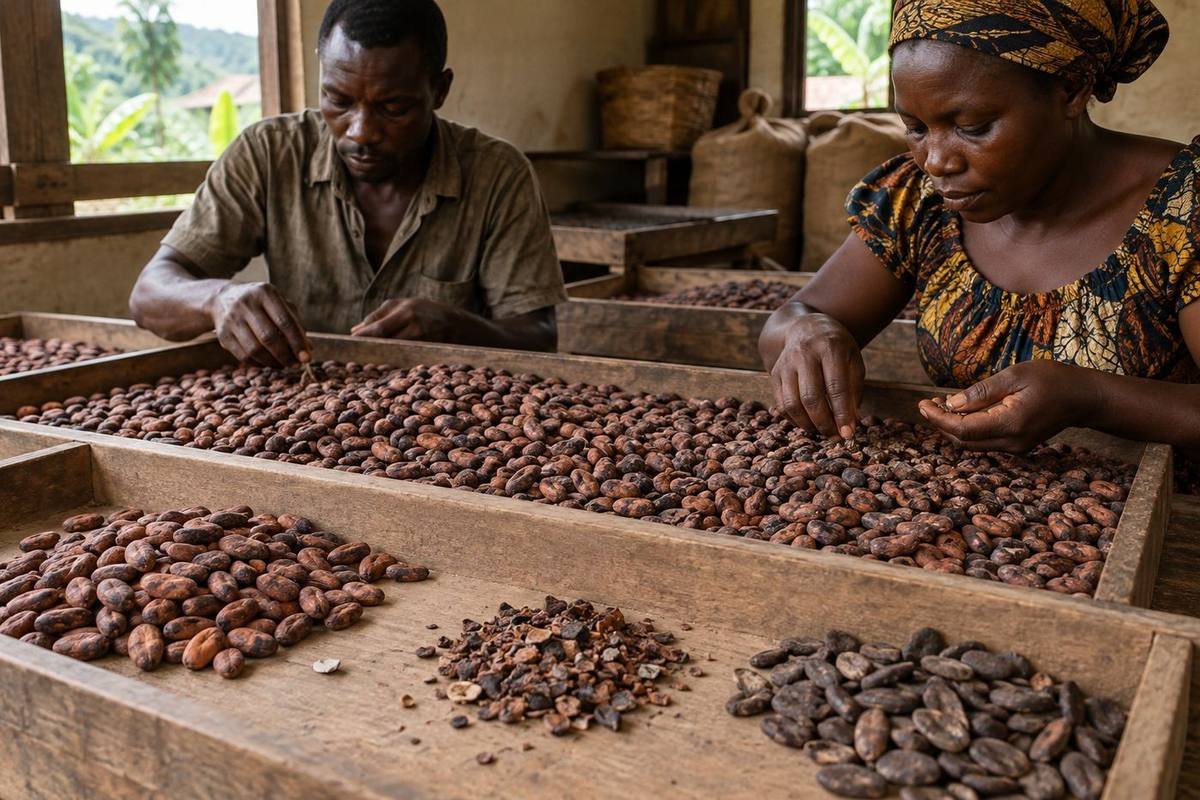
- Harvest only ripe pods and open them within a few days
- Ferment for around five to seven days, turning the beans regularly
- Dry on raised racks or tarpaulins, never on the ground or road
- Never dry over smoke: smoky beans are a serious defect
- Remove flat, broken and germinated beans and any foreign matter
- Store in clean jute bags on pallets, away from fuel and chemicals
Have dried cocoa beans to sell?
Check today’s buying price, then bring your beans to one of our branches at Kombone, Kake or Kumba. Questions first? Contact us.